


Why 3-Minute MOBA Matches Are the Future of Mobile PvP

The core problem:
The median mobile gaming session lasts 5–6 minutes (GameAnalytics, 2024–2025). A standard Mobile Legends match takes 10–15 minutes. A Wild Rift match takes 15–20. These games were designed for sessions that mobile players do not actually have. The next generation of mobile MOBAs is closing that gap.
Mobile gaming is not small-screen PC gaming. It never was. The devices are the same ones people use to check messages, navigate traffic, and scroll through feeds. Playing happens in gaps — between meetings, on a bus, in a waiting room. The rhythm of mobile play is short, frequent sessions spread across an entire day, not a single 30-minute block carved out of an evening.
Yet the dominant mobile MOBAs were built on a different assumption. Mobile Legends, Wild Rift, and Honor of Kings all inherited their match structures from PC predecessors designed for seated play sessions of 30 minutes or more. Their mobile versions compressed the experience somewhat — but a 12-minute match is still more than twice the length of an average mobile gaming session.
A new generation of games is questioning that assumption entirely. What happens when you design a MOBA from scratch for how mobile players actually play? You get three-minute matches. And they might be the most competitive MOBA format on mobile.
The 20-Minute Match Was Designed for PCs, Not Phones
How Traditional MOBAs Inherited PC Session Length
The original MOBA format — born from Warcraft III mods in the early 2000s and formalized by League of Legends in 2009 — was designed for players sitting at a desk with a mouse and keyboard. Matches lasted 30-45 minutes because the audience had that time. A match of Dota 2 or League of Legends is a strategic arc: early laning, mid-game rotations, late-game team fights, and a decisive push.
When MOBAs moved to mobile, developers shortened that arc. Mobile Legends cut matches to 10-15 minutes. Wild Rift aimed for 15-20. Arena of Valor targeted 12-18. These were genuine improvements. But they were still adaptations of a PC format, not games designed from the ground up for mobile behavior.
The Data: Mobile Players Do Not Play Like PC Players
The numbers are unambiguous. According to GameAnalytics benchmarks and Sensor Tower data from 2024-2025, the median mobile gaming session across all game types is 5-6 minutes. The top-performing 25% of mobile games reach average sessions of 8-9 minutes. Players compensate for short sessions with frequency, logging 4-6 sessions per day.
This means the average mobile gamer opens a game, plays for five minutes, and closes it. A 12-minute MOBA match demands more than double that commitment. A 20-minute match demands quadruple.
When you compare mobile MOBA match lengths against the median session, the mismatch becomes stark. Blitz of Battle at approximately three minutes fits comfortably within a single session — it takes only half the median time. Brawl Stars at three to four minutes also fits easily. Pokemon UNITE’s Quick Battle at five minutes just barely fits. But Mobile Legends at 10-15 minutes requires two to three times the median session. Arena of Valor at 12-18 minutes demands two to three and a half times longer. Wild Rift at 15-20 minutes asks for three to four times what the average mobile player actually has. Only games with match times at or below the median fit naturally into how mobile players use their devices.
Why Mobile Players Abandon Matches
When a match exceeds the time a player actually has, one of two things happens: they never start the match, or they start it and abandon it. High AFK rates in mobile MOBAs are not a mystery. They are the predictable result of asking players to commit 15 minutes in a context where they routinely have five. The game is not broken — the session design is mismatched with the platform.
What Happens When You Compress a MOBA to 3 Minutes
No Farming Phase — Action from Second One
Traditional MOBAs front-load two to five minutes of laning: last-hitting minions, jockeying for position, waiting for level spikes. In a three-minute match, that phase does not exist. Combat begins immediately. Both duos engage from the moment the match starts, and the first ability trade can determine the trajectory of the entire game.
This is not a simplification. It is a compression. The strategic decisions that happen across 15 minutes in a traditional MOBA — when to engage, when to disengage, when to use a key ability, when to commit to an objective — still exist. They just happen faster. The decision density per second is higher, not lower.
Every Mistake Is Punished Immediately
In a 15-minute match, a bad trade at minute two is recoverable. You farm safely, wait for a power spike, and re-engage later. In a three-minute match, that safety net does not exist. A misused ability or a bad position in the first 30 seconds can cost the game. The margin for error is razor-thin, which is exactly what makes the format rewarding for competitive players.
This is the counterintuitive truth about short matches: they are harder, not easier. The compressed timeline raises the skill floor because consistency matters more when there is no time to recover from mistakes.
Partner Synergy Replaces Team Coordination Overhead
Coordinating five players requires communication systems, role assignments, draft strategy, and a shared understanding of macro objectives. Coordinating two players requires eye contact. The 2v2 format, which pairs naturally with short match times, strips away the coordination overhead that makes 5v5 MOBAs both strategically rich and frustratingly dependent on strangers.
In Blitz of Battle, the only mobile MOBA built entirely around three-minute 2v2 matches, duo synergy IS the strategy. Pairing Balec’s area-of-effect damage with Halyx’s frontline control is not a suggestion from a tier list — it is the difference between a two-minute victory and a 30-second collapse.
The Games Leading This Shift
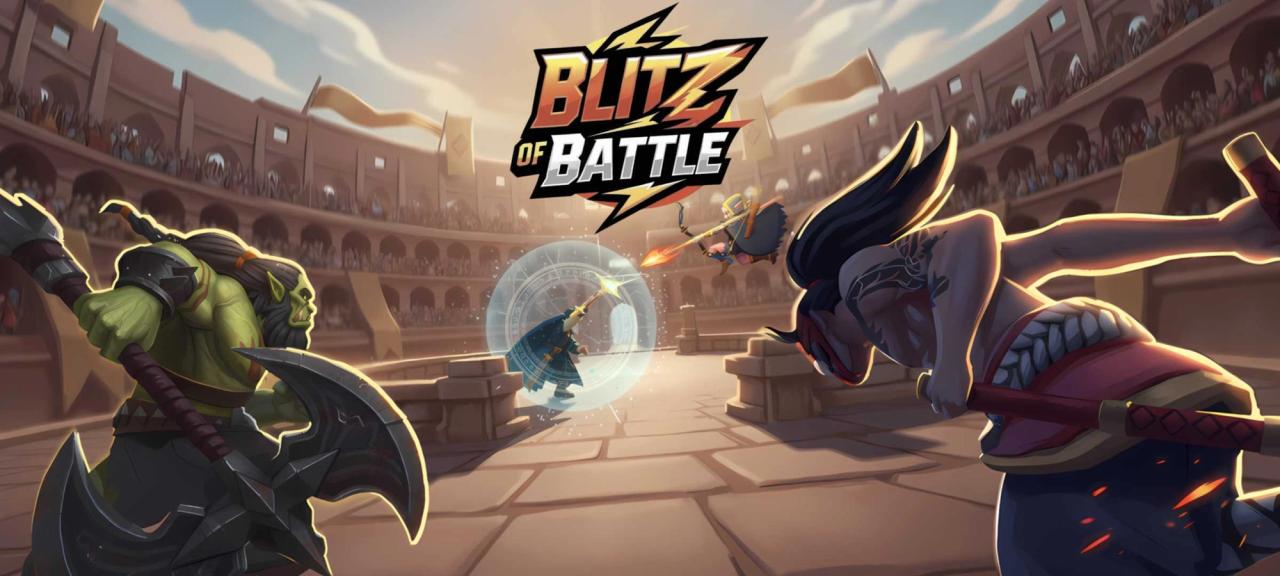
Blitz of Battle: The 3-Minute 2v2 Case Study
Blitz of Battle is the clearest expression of mobile-native MOBA design. Every match is two players versus two, lasting approximately three minutes, across three distinct game modes: Action Zone, Turret Blast, and Soccer Knockout. Twelve heroes span five roles, and the ranked system runs nine tiers from Scholar to Immortal.
What makes the game architecturally different is that the three-minute constraint is not a mode — it is the entire design philosophy. Hero abilities, arena sizes, damage curves, and objective timers are all calibrated for that window. Three matches in the time one Mobile Legends game takes.
For a full breakdown, see our Best 2v2 MOBA Games for Mobile in 2026 guide.

Brawl Stars: 3v3 in Under 5 Minutes
Supercell’s Brawl Stars proved that short competitive matches work at massive scale. With 3v3 modes completing in under four minutes and over 80 Brawlers available, the game demonstrated that competitive depth and brevity are not mutually exclusive.
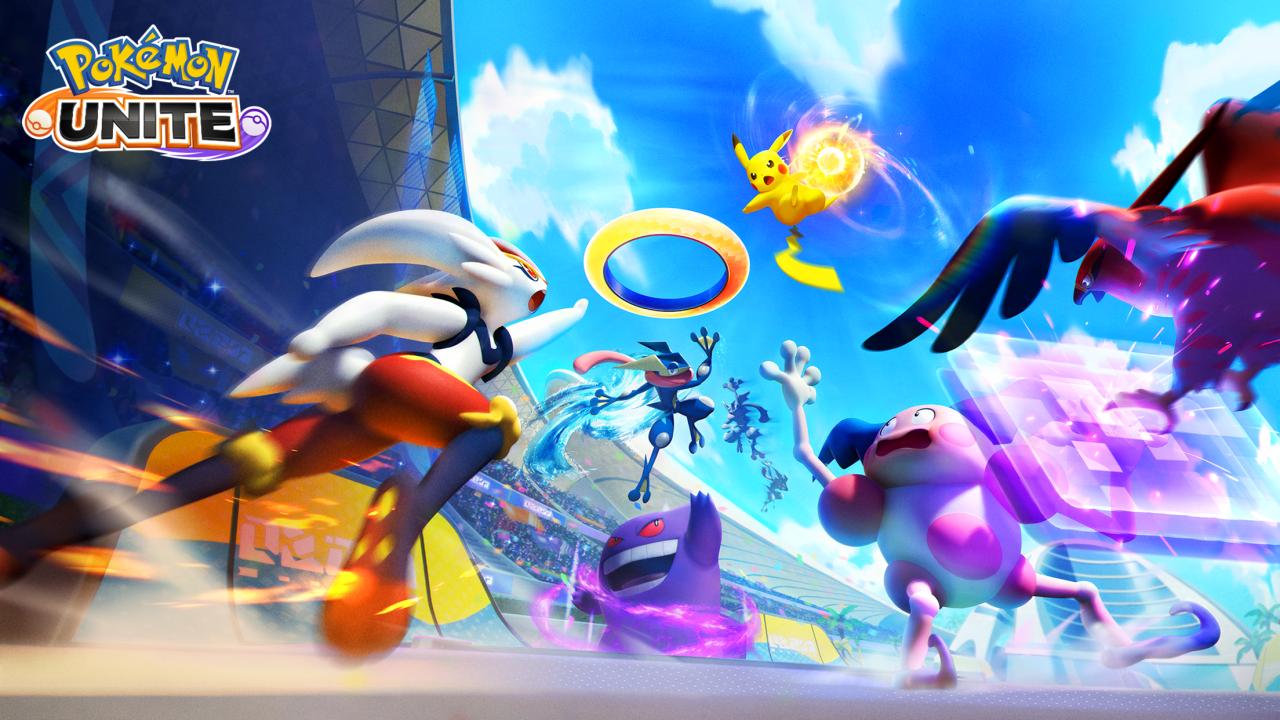
Pokemon UNITE: The Halfway Step
Pokemon UNITE’s Quick Battle mode caps at five minutes — a direct acknowledgment that standard 10-minute matches are too long for many mobile players. But Quick Battle is a side mode without the full ranked infrastructure of standard play. It shows a major publisher recognizing the problem without fully committing to the solution.
Why Short Matches Are Harder, Not Easier
Compressed Decision Windows Raise the Skill Floor
In a three-minute match, you make the same number of critical decisions as a ten-minute match — but you make them three times faster. When to engage, which ability to use, whether to push the objective or fight the opponent — these choices happen continuously with no breathing room. The gap between a good player and a great player is more visible in compressed formats.
No Comeback Mechanics — Consistency Wins
Longer matches often include comeback mechanics: gold bounties for killing fed players, late-game scaling that rewards passive play, neutral objectives that reset advantages. Three-minute matches do not allow that. There is no late game. Whoever plays better for three minutes wins. This rewards consistency over volatility.
Ranked Climbing Becomes Faster and Fairer
A 20-minute match means three ranked games per hour. A three-minute match means fifteen to twenty. Higher sample sizes compress the variance that plagues 5v5 ranked ladders. Over fifty three-minute games, your rank converges on your true skill level far faster than over fifty fifteen-minute games.
What This Means for Mobile Esports
Short matches fundamentally change the esports viewing experience. A best-of-seven series in three-minute matches takes 21 minutes — shorter than a single game of competitive Wild Rift. This makes tournaments more dense, more unpredictable, and more accessible to viewers with limited attention spans.
The format is tailor-made for mobile-first streaming platforms like TikTok and YouTube Shorts, where content under five minutes outperforms longer formats. Mobile esports has struggled to find its own identity beyond being a smaller version of PC esports. Short-match formats offer a path to something genuinely new.
People Also Ask
How long are mobile MOBA matches?
Traditional mobile MOBAs like Mobile Legends and Wild Rift average 10-20 minutes per match. Newer formats are significantly shorter: Blitz of Battle completes full matches in approximately three minutes, and Brawl Stars finishes rounds in three to four minutes.
What MOBA has the shortest matches?
Blitz of Battle has the shortest dedicated MOBA matches at approximately three minutes per game. Every match includes hero selection, real-time 2v2 combat, and a definitive win/loss outcome within that window.
What is the average mobile gaming session length?
The median mobile gaming session is 5-6 minutes as of 2024-2025 (GameAnalytics, Sensor Tower). The top 25% of mobile games reach average sessions of 8-9 minutes. Players typically log 4-6 sessions per day.
Are short MOBA matches less competitive?
No. Shorter matches compress decision-making into less time, raising the skill floor. There is no farming phase to recover from mistakes, and the ranked ladder converges on true skill faster.
Frequently Asked Questions
[Implement as FAQPage schema — JSON-LD at end]
Q: Can a MOBA work in 3 minutes?
Yes. Blitz of Battle demonstrates that hero selection, ability-based combat, and objective play can deliver a complete competitive experience in three minutes. The key is designing every game element around the compressed timeline from the start.
Q: What is the fastest mobile MOBA?
Blitz of Battle is the fastest dedicated mobile MOBA with matches completing in approximately three minutes. Brawl Stars offers similarly fast rounds but uses a different gameplay model closer to an action-shooter.
Q: Why are mobile MOBA matches shorter than PC MOBAs?
Mobile players game in shorter sessions with a median of 5-6 minutes. Games designed for mobile need to deliver a complete competitive experience within that window. PC MOBAs target players at a desk for 30+ minutes.
Q: Can mobile esports work with 3-minute matches?
Yes. Shorter matches enable best-of-seven or best-of-nine series that complete in under 25 minutes, are more exciting for viewers, and suit mobile-first streaming platforms.
Q: What game modes does Blitz of Battle have?
Blitz of Battle offers three game modes: Action Zone (arena control), Turret Blast (base destruction), and Soccer Knockout (a MOBA-football hybrid). Action Zone and Turret Blast complete in approximately three minutes, while Soccer Knockout runs up to five minutes.
Q: How many ranked games can I play in an hour in Blitz of Battle?
Approximately 15-20 ranked matches per hour including queue times. A traditional MOBA allows 3-4 ranked games in the same time.
Experience 3-Minute MOBA Matches for Yourself
Blitz of Battle is free on iOS and Android. Play your first match in under a minute and discover why short matches produce more intense competition, not less.
Download: App Store | Google Play
Next read: Best 2v2 MOBA Games for Mobile in 2026